
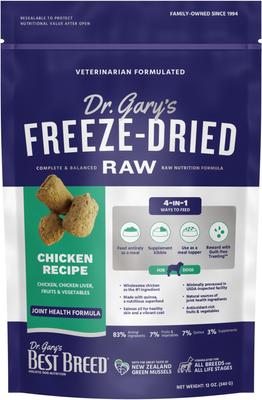
Chicken Recipe High-Protein Adult Raw Freeze-Dried Dog Food, 12-oz bag
Dr. Gary's Best Breed Chicken Recipe High-Protein Adult Raw Freeze-Dried Dog Food, 12-oz bag earns a Sniff Score of 74/100 (B) with Fair evidence. Zero controversial ingredients flagged. Reasonable protein quality. chicken delivers solid amino acid coverage..
Graded by The Sniff System
Reasonable protein quality. chicken delivers solid amino acid coverage.
Quality carbohydrate sources with fermentable fiber.
Quality fat sources: named fat with marine oil (EPA and DHA source).
Read why each ingredient is good or bad for dogs.
- 1protein animalchicken
Real meat. Primary protein source, with the amino acid profile dogs actually evolved to eat.
- 2ground chicken bones
- 3protein animalchicken liver
Organ meat. Dense in protein, iron, vitamin A, and the B vitamins. Among the most nutrient-rich ingredients a dog can eat.
- 4grainquinoa
Pseudo-grain with a complete amino acid profile. Rare in dog food because it's expensive.
- 5dried eggs
Whole eggs. The highest-quality protein on any ingredient label by amino acid score.
- 6sunflower seeds
- 7flaxseeds
Plural form, same as flaxseed. Plant source of omega-3, helpful for skin and coat.
- 8apple
Real fruit, some fiber and antioxidants. The amount in kibble is too small to matter much.
- 9vegetablesweet potato
Complex carb with fiber and beta-carotene. Gentle on the stomach.
- 10fatsalmon oil
Pure omega-3s. The thing skin-and-coat formulas are usually built around.
- 11green mussels
- 12carrot
Real vegetable. Fiber, beta-carotene, antioxidants. Same as carrots, sometimes singular on labels.
- 13vegetablespinach
Leafy green. Some iron, vitamin K, and fiber. The dose in kibble is small but it's real food.
- 14chicken cartilage
- 15mineraldicalcium phosphate
Calcium and phosphorus combined. Required source of both minerals, especially in formulas without much bone content.
- 16mineralpotassium chloride
Required mineral. Sometimes used as a salt substitute. Standard inclusion in complete diets.
- 17mineralsalt
Sodium chloride. Required at small doses for normal physiology. Not a quality concern in standard amounts.
- 18fiberinulin
Prebiotic fiber that feeds beneficial gut bacteria. Same compound found in chicory root.
- 19vitaminvitamin e supplement
Required nutrient and a natural antioxidant. Often pulls double duty as a preservative.
- 20preservative naturalmixed tocopherols
Natural vitamin E used to keep fats from going rancid. The good kind of preservative.
- 21fruitblueberries
Antioxidants, real. But the amount in any kibble is too small to do much. Mostly marketing.
- 22fruitcranberries
Often added with a urinary-tract-support marketing angle. Real cranberry compounds help in concentrate form, but kibble doses are small.
- 23vegetablepumpkin
Soluble fiber that supports stool quality. Mild and well-tolerated.
- 24vegetablebroccoli
Real vegetable. Adds fiber and some antioxidants. Fine in the small amounts used in kibble.
- 25supplementkelp
Seaweed source of iodine. Trace mineral support, common in better formulas.
Showing first 25 of 43. Position 1-5 has the largest weight in the recipe.
21 of 25 ingredients have a curated note. Coverage grows over time.