
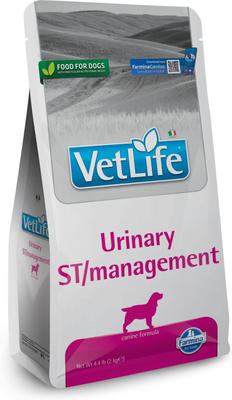
Urinary ST Management Canine Dry Dog Food, 4.4-lb bag
Farmina Vet Life Urinary ST Management Canine Dry Dog Food, 4.4-lb bag earns a Sniff Score of 63/100 (B) with Fair evidence. Zero controversial ingredients flagged. Quality carbohydrate sources with declared fiber..
Graded by The Sniff System
Quality carbohydrate sources with declared fiber.
Quality fat sources: named fat with marine oil (EPA and DHA source).
AAFCO feeding trial substantiation for not stated.
Plant-protein-dominated formula. rice as the #1 ingredient.
Read why each ingredient is good or bad for dogs.
- 1grainrice
Generic rice. Could be white or brown, the label doesn't say. Brown rice would be specified if it were.
- 2dehydrated chicken
Real meat. Primary protein source, with the amino acid profile dogs actually evolved to eat.
- 3fatchicken fat
Despite the name, a high-quality energy source. Concentrated calories plus essential fatty acids like linoleic acid.
- 4vegetablesweet potato
Complex carb with fiber and beta-carotene. Gentle on the stomach.
- 5grainoats
Whole grain. Steady energy, soluble fiber, and well-tolerated by most dogs.
- 6dried whole eggs
- 7pork fat
Real animal fat from a named species. Clean energy source.
- 8othernatural flavors
Same as natural flavor. Usually hydrolyzed liver or broth, adds palatability.
- 9fatflaxseed
Plant source of omega-3. Helpful for skin and coat, though dogs absorb omega-3 from fish more efficiently.
- 10hydrolyzed fish
- 11herring oil
Concentrated omega-3 from herring. Same role as salmon oil, skin and coat support.
- 12mineralpotassium chloride
Required mineral. Sometimes used as a salt substitute. Standard inclusion in complete diets.
- 13fiberpowdered cellulose
Plant fiber, often from wood pulp. Cheap bulk filler. Not harmful, but a tell that the recipe is reaching for inexpensive bulk.
- 14calcium sulfate dihydrate
- 15mineralcalcium carbonate
Source of calcium. Functional. Required in complete dog foods, especially those without bone-in meat meals.
- 16mineralsalt
Sodium chloride. Required at small doses for normal physiology. Not a quality concern in standard amounts.
- 17supplementglucosamine hydrochloride
Joint-support compound. Most useful in larger doses for older dogs. The kibble dose is real but modest.
- 18vitaminvitamin a supplement
Vitamin A in stable, standardized form. Required for vision, immune function, and growth.
- 19vitaminvitamin d3 supplement
The active form of vitamin D dogs need. Required for calcium absorption and bone health.
- 20vitaminvitamin e supplement
Required nutrient and a natural antioxidant. Often pulls double duty as a preservative.
- 21vitaminascorbic acid
Vitamin C. Pulls double duty as a natural antioxidant preservative.
- 22vitaminniacin supplement
B vitamin (B3). Required in complete dog foods, added as a supplement to standardize the dose.
- 23vitamincalcium pantothenate
Same as d-calcium pantothenate. Vitamin B5 in standardized form.
- 24vitaminriboflavin supplement
B vitamin (B2). Required in complete dog foods. The standardized form ensures consistent dosing.
- 25vitaminpyridoxine hydrochloride
B vitamin (B6). Essential for protein metabolism. Standard inclusion in complete formulas.
Showing first 25 of 43. Position 1-5 has the largest weight in the recipe.
22 of 25 ingredients have a curated note. Coverage grows over time.