
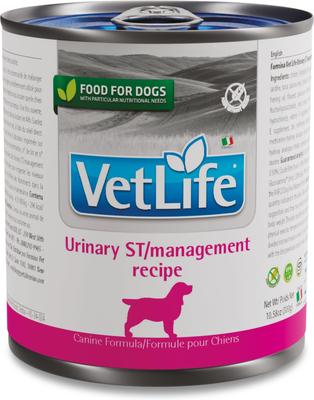
Urinary ST Management Canine Wet Dog Food, 10.58-oz can, case of 6
Farmina Vet Life Urinary ST Management Canine Wet Dog Food, 10.58-oz can, case of 6 earns a Sniff Score of 71/100 (B) with Fair evidence. 1 controversial ingredient flagged. Strong protein profile with chicken as the primary ingredient, delivering high biological value..
Graded by The Sniff System
Strong protein profile with chicken as the primary ingredient, delivering high biological value.
Quality carbohydrate sources with declared fiber.
Quality fat sources: named fat with marine oil (EPA and DHA source).
Contains msg. Safety signal is internet-fueled; real issue is transparency. Yeast extract as MSG loophole obscures formulation..
Wet and fresh foods contain more water than kibble (typically 65-78%). On a dry-matter basis, this food's protein content is roughly 36%, comparable to premium kibble (typically 30-45% DMB protein).
Read why each ingredient is good or bad for dogs.
- 1protein animalchicken
Real meat. Primary protein source, with the amino acid profile dogs actually evolved to eat.
- 2hydrolyzed fish
- 3eggs
Whole eggs. The highest-quality protein on any ingredient label by amino acid score.
- 4vegetablesweet potato
Complex carb with fiber and beta-carotene. Gentle on the stomach.
- 5protein animalchicken liver
Organ meat. Dense in protein, iron, vitamin A, and the B vitamins. Among the most nutrient-rich ingredients a dog can eat.
- 6protein animalsardine
- 7tuna
- 8quinoa seed
- 9fatchicken fat
Despite the name, a high-quality energy source. Concentrated calories plus essential fatty acids like linoleic acid.
- 10herring oil
Concentrated omega-3 from herring. Same role as salmon oil, skin and coat support.
- 11fatflaxseed
Plant source of omega-3. Helpful for skin and coat, though dogs absorb omega-3 from fish more efficiently.
- 12mineralpotassium chloride
Required mineral. Sometimes used as a salt substitute. Standard inclusion in complete diets.
- 13mineralsalt
Sodium chloride. Required at small doses for normal physiology. Not a quality concern in standard amounts.
- 14calcium sulfate dihydrate
- 15fructooligosaccharide
Prebiotic fiber, often abbreviated FOS. Feeds beneficial gut bacteria.
- 16yeast extract
Yeast broken down to a paste. Strong palatant plus a real source of B vitamins.
- 17brewers dried yeast
Yeast left over from brewing. Rich in B vitamins and amino acids. A traditional and well-tolerated inclusion.
- 18supplementglucosamine hydrochloride
Joint-support compound. Most useful in larger doses for older dogs. The kibble dose is real but modest.
- 19vitaminvitamin a supplement
Vitamin A in stable, standardized form. Required for vision, immune function, and growth.
- 20vitaminvitamin d3 supplement
The active form of vitamin D dogs need. Required for calcium absorption and bone health.
- 21vitaminvitamin e supplement
Required nutrient and a natural antioxidant. Often pulls double duty as a preservative.
- 22zinc methionine hydroxy analogue chelate
- 23manganese methionine hydroxy analogue chelate
- 24ferrous glycine
- 25copper methionine hydroxy analogue chelate
Showing first 25 of 29. Position 1-5 has the largest weight in the recipe.
16 of 25 ingredients have a curated note. Coverage grows over time.