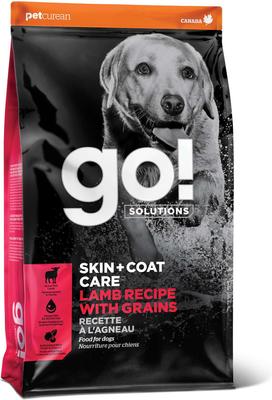
Skin + Coat Care Lamb Recipe Dry Dog Food, 22-lb bag
Go! Solutions Skin + Coat Care Lamb Recipe Dry Dog Food, 22-lb bag earns a Sniff Score of 59/100 (C) with Fair evidence. Zero controversial ingredients flagged. Score capped at 59 due to no AAFCO statement.
Graded by The Sniff System
Quality carbohydrate sources with fermentable fiber.
Quality fat sources: named fat with marine oil (EPA and DHA source).
Premium micronutrient forms such as chelated minerals or natural vitamin E.
No AAFCO statement. Nutritional completeness unverified.
Read why each ingredient is good or bad for dogs.
- 1protein animallamb meal
Lamb cooked down to a dry concentrate. Per pound, more protein than fresh lamb.
- 2grainoatmeal
Gentle on the stomach. Slow-release carbs and soluble fiber that supports stool quality.
- 3grainbrown rice
Whole grain that's easy to digest. Steady carb energy plus a little fiber.
- 4de-boned lamb
- 5fatcanola oil
Plant oil. Some omega-3 from the parent plant, though dogs absorb it less efficiently than fish-derived omega-3. Fine in moderation.
- 6fatcoconut oil
Saturated fat with medium-chain triglycerides. Mostly marketing in the doses kibble uses, but harmless.
- 7natural lamb flavour
- 8fatflaxseed
Plant source of omega-3. Helpful for skin and coat, though dogs absorb omega-3 from fish more efficiently.
- 9fatsalmon oil
Pure omega-3s. The thing skin-and-coat formulas are usually built around.
- 10mineralpotassium chloride
Required mineral. Sometimes used as a salt substitute. Standard inclusion in complete diets.
- 11mineralsodium chloride
Same as salt. Required mineral, necessary at small doses.
- 12fruitapples
Real fruit, some fiber and antioxidants. The amount in kibble is too small to matter much.
- 13vegetablecarrots
Real vegetable. Fiber, beta-carotene, and a small amount of antioxidant value.
- 14fruitcranberries
Often added with a urinary-tract-support marketing angle. Real cranberry compounds help in concentrate form, but kibble doses are small.
- 15fiberdried chicory root
Natural prebiotic. Feeds beneficial gut bacteria. The same compound (inulin) used in human gut-health products.
- 16probioticdried lactobacillus acidophilus fermentation product
A probiotic strain. Whether the dose is high enough to actually colonize is debated, but it's a real beneficial bacterium.
- 17probioticdried enterococcus faecium fermentation product
- 18mineralzinc proteinate
Zinc bound to protein for better absorption. The premium form of the mineral, versus zinc oxide which sits cheaper on the label.
- 19mineraliron proteinate
Iron bound to protein for better absorption. The premium form versus inorganic iron sulfate.
- 20mineralcopper proteinate
Copper bound to protein for better absorption. Common in better-formulated diets.
- 21zinc oxide
Inorganic zinc. Cheapest mineral form on the market. Functional but less bioavailable than chelated alternatives.
- 22mineralmanganese proteinate
Manganese bound to protein for better absorption. The chelated form most premium brands use.
- 23copper sulphate
- 24ferrous sulphate
- 25mineralcalcium iodate
Source of iodine for thyroid function. Functional, required in complete formulas.
Showing first 25 of 33. Position 1-5 has the largest weight in the recipe.
20 of 25 ingredients have a curated note. Coverage grows over time.