
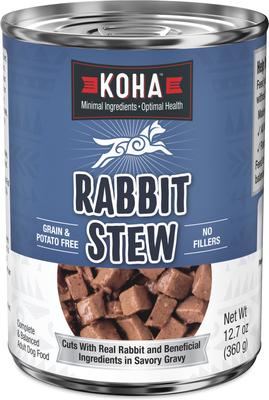
Rabbit Stew High Protein Limited Ingredient Wet Dog Food, 12.7-oz can, case of 12
KOHA Rabbit Stew High Protein Limited Ingredient Wet Dog Food, 12.7-oz can, case of 12 earns a Sniff Score of 51/100 (C) with Fair evidence. 1 controversial ingredient flagged. Score capped at 59 due to no AAFCO statement.
Graded by The Sniff System
Reasonable protein quality. rabbit delivers solid amino acid coverage.
Includes egg, named fish, or organ meat for diverse high-bioavailability protein.
No declared omega-3 source. Fish oil, salmon oil, and algae oil all absent.
No AAFCO statement. Nutritional completeness unverified.
Controversial ingredients · 1
- sodium seleniteSynthetic selenium source. Selenium is essential, but sodium selenite has a narrower safety margin than organic alternatives like selenium yeast. Better-formulated foods use the organic form.
Every flagged ingredient has a published basis (confirmed harm / regulatory action / precautionary). See methodology →
Wet and fresh foods contain more water than kibble (typically 65-78%). On a dry-matter basis, this food's protein content is roughly 44%, comparable to premium kibble (typically 30-45% DMB protein).
Read why each ingredient is good or bad for dogs.
- 1rabbit
Real meat, very lean. A common novel protein for elimination diets.
- 2pork broth
- 3vegetable broth
- 4protein animalpork liver
Organ meat. Dense in B vitamins, iron, and vitamin A. Among the most nutritious ingredients on any label.
- 5legumelentils
Same concern as peas. Affordable plant protein, but when they pile up in the top 5 ingredients, it's a flag. See why →
- 6dried egg product
Whole eggs with the water removed. Same nutritional value as fresh eggs, just shelf-stable.
- 7porcine plasma
- 8protein animalpork
Real meat. Dense protein and fat, though less common in dog food than chicken or beef.
- 9fiberguar gum
Thickener common in wet food. Emerging research on emulsifiers and the gut microbiome, but no smoking gun in dogs yet.
- 10vegetablepumpkin
Soluble fiber that supports stool quality. Mild and well-tolerated.
- 11mineralcalcium carbonate
Source of calcium. Functional. Required in complete dog foods, especially those without bone-in meat meals.
- 12sodium phosphate
Mineral source and preservative. Standard inclusion at small doses.
- 13mineralpotassium chloride
Required mineral. Sometimes used as a salt substitute. Standard inclusion in complete diets.
- 14mineralsalt
Sodium chloride. Required at small doses for normal physiology. Not a quality concern in standard amounts.
- 15supplementtaurine
Amino acid critical for heart health. Especially important in grain-free or pulse-heavy formulas where natural taurine precursors run thin.
- 16supplementcholine chloride
Essential nutrient for liver and brain function. Standard inclusion in complete dog foods.
- 17mineralzinc proteinate
Zinc bound to protein for better absorption. The premium form of the mineral, versus zinc oxide which sits cheaper on the label.
- 18mineraliron proteinate
Iron bound to protein for better absorption. The premium form versus inorganic iron sulfate.
- 19fenugreek seed
Herb seed. Trace inclusion, mostly for flavor and label appeal.
- 20dried kale
Leafy green with antioxidants and fiber. Small dose in kibble, but it's not just for marketing.
- 21supplementginger
Real spice. Some anti-nausea evidence in humans, but the dose in kibble is small. Mostly for flavor.
- 22supplementrosemary
- 23mineralmagnesium sulfate
Source of magnesium, a required mineral. Standard inclusion in complete diets.
- 24vitaminvitamin e supplement
Required nutrient and a natural antioxidant. Often pulls double duty as a preservative.
- 25mineralcopper proteinate
Copper bound to protein for better absorption. Common in better-formulated diets.
Showing first 25 of 39. Position 1-5 has the largest weight in the recipe.
21 of 25 ingredients have a curated note. Coverage grows over time.