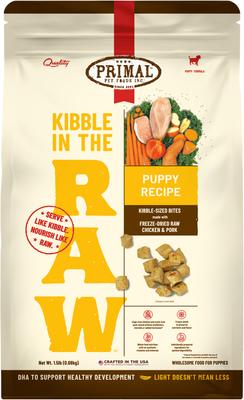
Kibble in the Raw Recipe Non-GMO Freeze-Dried Puppy Food, 24-oz bag
Primal Kibble in the Raw Recipe Non-GMO Freeze-Dried Puppy Food, 24-oz bag earns a Sniff Score of 71/100 (B) with Fair evidence. Zero controversial ingredients flagged. Strong protein profile with chicken as the primary ingredient, delivering high biological value..
Graded by The Sniff System
Strong protein profile with chicken as the primary ingredient, delivering high biological value.
Quality fat sources: named fat with marine oil (EPA and DHA source).
Quality carbohydrate sources with fermentable fiber.
Read why each ingredient is good or bad for dogs.
- 1protein animalchicken
Real meat. Primary protein source, with the amino acid profile dogs actually evolved to eat.
- 2protein animalchicken liver
Organ meat. Dense in protein, iron, vitamin A, and the B vitamins. Among the most nutrient-rich ingredients a dog can eat.
- 3grainsorghum
Whole grain with a low glycemic index. Gluten-free, well-tolerated, decent fiber content.
- 4protein animalpork
Real meat. Dense protein and fat, though less common in dog food than chicken or beef.
- 5pork plasma
- 6egg
Whole eggs. The highest-quality protein on any ingredient label, by amino acid score.
- 7fatsalmon oil
Pure omega-3s. The thing skin-and-coat formulas are usually built around.
- 8carrot
Real vegetable. Fiber, beta-carotene, antioxidants. Same as carrots, sometimes singular on labels.
- 9vegetablekale
Leafy green with antioxidants and fiber. Small dose in kibble, but it's not just for marketing.
- 10apple
Real fruit, some fiber and antioxidants. The amount in kibble is too small to matter much.
- 11vegetablesweet potato
Complex carb with fiber and beta-carotene. Gentle on the stomach.
- 12fatchicken fat
Despite the name, a high-quality energy source. Concentrated calories plus essential fatty acids like linoleic acid.
- 13dried yeast
Natural source of B vitamins and trace minerals. Adds a savory flavor that dogs respond well to.
- 14mineralsea salt
Same as salt. Required at small doses for normal physiology.
- 15montmorillonite clay
Natural clay used as a binder and anti-caking agent. Functional, not nutritional.
- 16fibermiscanthus grass
Perennial grass used as a fiber source. Replaces cellulose in some recipes. Functional but unremarkable.
- 17coconut
- 18vitaminvitamin e supplement
Required nutrient and a natural antioxidant. Often pulls double duty as a preservative.
- 19vegetable oil
Unnamed plant oil. Could be soy, canola, corn, or a blend. Named oils like sunflower or canola are more transparent.
- 20cod liver oil
- 21ground alfalfa
- 22fiberinulin
Prebiotic fiber that feeds beneficial gut bacteria. Same compound found in chicory root.
- 23dried organic kelp
- 24liquid lactobacillus acidophilus fermentation product
- 25liquid lactobacillus casei fermentation product
Showing first 25 of 31. Position 1-5 has the largest weight in the recipe.
18 of 25 ingredients have a curated note. Coverage grows over time.