
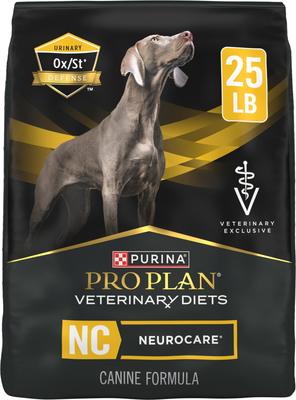
Neurocare Dry Dog Food, 25-lb bag
Purina Pro Plan Veterinary Diets Neurocare Dry Dog Food, 25-lb bag earns a Sniff Score of 69/100 (B) with Fair evidence. 1 controversial ingredient flagged. Strong protein profile with chicken as the primary ingredient, delivering high biological value..
Graded by The Sniff System
Strong protein profile with chicken as the primary ingredient, delivering high biological value.
Quality carbohydrate sources with declared fiber.
Quality fat sources: named fat with marine oil (EPA and DHA source).
Contains menadione. Banned for human OTC use but tolerated at AAFCO-permitted levels in pet food. The only AAFCO-permitted vitamin K source..
Controversial ingredients · 1
- menadioneSynthetic vitamin K3. Banned in human supplements due to toxicity concerns at high doses. Permitted in pet food but premium brands use natural vitamin K alternatives.
Every flagged ingredient has a published basis (confirmed harm / regulatory action / precautionary). See methodology →
Read why each ingredient is good or bad for dogs.
- 1protein animalchicken
Real meat. Primary protein source, with the amino acid profile dogs actually evolved to eat.
- 2protein animalchicken meal
Chicken with the water cooked out. Per pound, packs more protein than fresh chicken.
- 3corn protein meal
Concentrated corn protein. Similar in role to corn gluten meal, pads the protein number on the label without matching meat amino acids.
- 4brewers rice
Broken rice kernels left over from milling, usually destined for human beer-making. Cheaper than whole or even white rice. Same carbs, less nutrition than the brown version.
- 5grainyellow corn
- 6grainground wheat
Whole wheat. Fine for most dogs, though a portion are sensitive. Not a quality concern, just a fit-for-your-dog question.
- 7vegetable oil
Unnamed plant oil. Could be soy, canola, corn, or a blend. Named oils like sunflower or canola are more transparent.
- 8corn germ meal
- 9grainbarley
Whole grain with a low glycemic profile and some soluble fiber. Easy on blood sugar.
- 10glycerin
Humectant used in soft-moist foods to keep them chewy. Safe in moderation but a signal of a processed semi-moist product.
- 11fatfish oil
Concentrated omega-3s. The reason 'EPA' and 'DHA' get to show up on the bag.
- 12othernatural flavor
Legal term for animal-derived flavoring, usually hydrolyzed liver or broth. Adds taste, says nothing about quality.
- 13dried egg product
Whole eggs with the water removed. Same nutritional value as fresh eggs, just shelf-stable.
- 14supplementl-arginine
- 15wheat bran
- 16mono and dicalcium phosphate
Source of calcium and phosphorus. Standard inclusion in complete dog foods.
- 17protein animalfish meal
Concentrated fish protein, usually whitefish, herring, or mackerel. Strong amino acid profile.
- 18mineralsalt
Sodium chloride. Required at small doses for normal physiology. Not a quality concern in standard amounts.
- 19mineralpotassium chloride
Required mineral. Sometimes used as a salt substitute. Standard inclusion in complete diets.
- 20mineralcalcium carbonate
Source of calcium. Functional. Required in complete dog foods, especially those without bone-in meat meals.
- 21l-lysine monohydrochloride
Stable form of L-lysine, an essential amino acid. Common in plant-heavy formulas to balance the amino acid profile.
- 22vitaminvitamin e supplement
Required nutrient and a natural antioxidant. Often pulls double duty as a preservative.
- 23supplementcholine chloride
Essential nutrient for liver and brain function. Standard inclusion in complete dog foods.
- 24l-ascorbyl-2-polyphosphate
A stable form of vitamin C used in pet food. Provides antioxidant support and survives processing better than plain ascorbic acid.
- 25mineralzinc sulfate
Inorganic zinc. Effective at AAFCO doses but less well-absorbed than chelated forms like zinc proteinate.
Showing first 25 of 43. Position 1-5 has the largest weight in the recipe.
21 of 25 ingredients have a curated note. Coverage grows over time.