
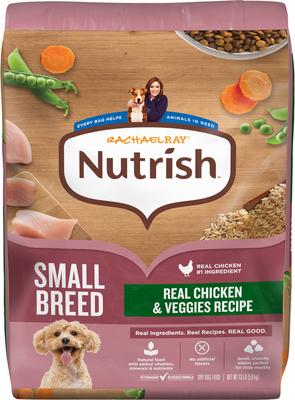
Real Chicken & Veggies Recipe Dry Small Breed Dog Food, 13-lb bag
Rachael Ray Nutrish Real Chicken & Veggies Recipe Dry Small Breed Dog Food, 13-lb bag earns a Sniff Score of 59/100 (C) with Fair evidence. Zero controversial ingredients flagged. Score capped at 59 due to no AAFCO statement.
Graded by The Sniff System
Strong protein profile with chicken as the primary ingredient, delivering high biological value.
Quality carbohydrate sources with declared fiber.
Named fresh meat paired with same-species meal, a strong extrusion architecture.
No AAFCO statement. Nutritional completeness unverified.
Controversial ingredients · 1
- sodium seleniteSynthetic selenium source. Selenium is essential, but sodium selenite has a narrower safety margin than organic alternatives like selenium yeast. Better-formulated foods use the organic form.
Every flagged ingredient has a published basis (confirmed harm / regulatory action / precautionary). See methodology →
Read why each ingredient is good or bad for dogs.
- 1protein animalchicken
Real meat. Primary protein source, with the amino acid profile dogs actually evolved to eat.
- 2protein animalchicken meal
Chicken with the water cooked out. Per pound, packs more protein than fresh chicken.
- 3protein plantsoybean meal
Concentrated soy protein. Cheap plant protein that pads the label number, common in budget formulas.
- 4graincorn
Whole corn is more nutritious than it gets credit for, with decent amino acids and steady carbs. The bigger concern is when corn dominates the top of the ingredient list at the expense of named meat.
- 5grain sorghum
Same as sorghum. Whole grain with a low glycemic index. Gluten-free, well-tolerated.
- 6fatchicken fat
Despite the name, a high-quality energy source. Concentrated calories plus essential fatty acids like linoleic acid.
- 7legumepeas
Cheap protein bulk. Fine in small amounts, but when peas stack with lentils and chickpeas in the top ingredients, it's the pattern the FDA flagged in its heart-disease investigation. See why →
- 8grainbrown rice
Whole grain that's easy to digest. Steady carb energy plus a little fiber.
- 9vegetablecarrots
Real vegetable. Fiber, beta-carotene, and a small amount of antioxidant value.
- 10protein animalfish meal
Concentrated fish protein, usually whitefish, herring, or mackerel. Strong amino acid profile.
- 11malted barley flour
- 12mineralsalt
Sodium chloride. Required at small doses for normal physiology. Not a quality concern in standard amounts.
- 13mineraldicalcium phosphate
Calcium and phosphorus combined. Required source of both minerals, especially in formulas without much bone content.
- 14othernatural flavor
Legal term for animal-derived flavoring, usually hydrolyzed liver or broth. Adds taste, says nothing about quality.
- 15mineralferrous sulfate
Inorganic iron. Standard mineral source. Iron proteinate is the gentler, better-absorbed premium form.
- 16mineralzinc sulfate
Inorganic zinc. Effective at AAFCO doses but less well-absorbed than chelated forms like zinc proteinate.
- 17mineralcopper sulfate
Inorganic copper. Standard, effective at small doses. Premium formulas tend to use copper proteinate instead.
- 18mineralsodium selenite Flagged
Inorganic selenium. Effective at AAFCO levels, no documented safety concern in dogs despite what some pet food blogs claim. Selenium yeast is a marginal upgrade, not a necessity. See why →
- 19mineralmanganese sulfate
Inorganic manganese. Functional but less well-absorbed than the chelated proteinate form.
- 20mineralcalcium iodate
Source of iodine for thyroid function. Functional, required in complete formulas.
- 21supplementtaurine
Amino acid critical for heart health. Especially important in grain-free or pulse-heavy formulas where natural taurine precursors run thin.
- 22preservative naturalcitric acid
Natural antioxidant preservative. Helps keep fats from going rancid.
- 23supplementcholine chloride
Essential nutrient for liver and brain function. Standard inclusion in complete dog foods.
- 24lactic acid
Natural acid used as a mild preservative and pH adjuster. Found in fermented foods too. Safe at typical inclusion.
- 25preservative naturalmixed tocopherols
Natural vitamin E used to keep fats from going rancid. The good kind of preservative.
Showing first 25 of 26. Position 1-5 has the largest weight in the recipe.
24 of 25 ingredients have a curated note. Coverage grows over time.