
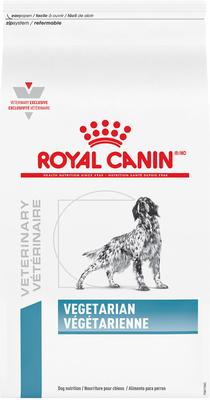
Adult Vegetarian Dry Dog Food, 17.6-lb bag
Royal Canin Veterinary Diet Adult Vegetarian Dry Dog Food, 17.6-lb bag earns a Sniff Score of 44/100 (D) with Fair evidence. Zero controversial ingredients flagged. Primary concern: plant-protein-dominated formula. oat groats as the #1 ingredient..
Graded by The Sniff System
Quality carbohydrate sources with fermentable fiber.
AAFCO feeding trial substantiation for adult maintenance.
Premium micronutrient forms such as chelated minerals or natural vitamin E.
Plant-protein-dominated formula. oat groats as the #1 ingredient.
Controversial ingredients · 1
- sodium seleniteSynthetic selenium source. Selenium is essential, but sodium selenite has a narrower safety margin than organic alternatives like selenium yeast. Better-formulated foods use the organic form.
Every flagged ingredient has a published basis (confirmed harm / regulatory action / precautionary). See methodology →
Read why each ingredient is good or bad for dogs.
- 1oat groats
Whole oats with only the inedible hull removed. The most intact form of oats available.
- 2brewers rice
Broken rice kernels left over from milling, usually destined for human beer-making. Cheaper than whole or even white rice. Same carbs, less nutrition than the brown version.
- 3protein plantpotato protein
Concentrated potato protein. Like pea protein, it inflates the protein number without matching meat-quality amino acids.
- 4fatcoconut oil
Saturated fat with medium-chain triglycerides. Mostly marketing in the doses kibble uses, but harmless.
- 5othernatural flavors
Same as natural flavor. Usually hydrolyzed liver or broth, adds palatability.
- 6dried plain beet pulp
Beet fiber, with the sugar removed. Long unfairly maligned. It's a real soluble fiber that supports stool quality.
- 7fiberpea fiber
Insoluble fiber from peas. Doesn't carry the protein-inflation concern of pea protein. Mostly there for stool quality.
- 8fibertomato pomace
The fiber-rich byproduct of tomato processing. Sometimes flagged unfairly. It's a real fiber source, not a filler shortcut.
- 9fatflaxseed
Plant source of omega-3. Helpful for skin and coat, though dogs absorb omega-3 from fish more efficiently.
- 10monocalcium phosphate
Source of calcium and phosphorus. Standard mineral inclusion in complete dog foods.
- 11mineralcalcium carbonate
Source of calcium. Functional. Required in complete dog foods, especially those without bone-in meat meals.
- 12mineralpotassium chloride
Required mineral. Sometimes used as a salt substitute. Standard inclusion in complete diets.
- 13calcium sulfate
Source of calcium. Functional, required for AAFCO-complete formulas.
- 14mineralsalt
Sodium chloride. Required at small doses for normal physiology. Not a quality concern in standard amounts.
- 15fiberfructooligosaccharides
Prebiotic fiber, often called FOS. Feeds beneficial gut bacteria, similar in function to inulin.
- 16supplementdl-methionine
Essential amino acid. Often added when plant proteins dominate, since methionine is naturally lower in pulses than meat.
- 17supplementtaurine
Amino acid critical for heart health. Especially important in grain-free or pulse-heavy formulas where natural taurine precursors run thin.
- 18supplementcholine chloride
Essential nutrient for liver and brain function. Standard inclusion in complete dog foods.
- 19mineralzinc proteinate
Zinc bound to protein for better absorption. The premium form of the mineral, versus zinc oxide which sits cheaper on the label.
- 20zinc oxide
Inorganic zinc. Cheapest mineral form on the market. Functional but less bioavailable than chelated alternatives.
- 21mineralferrous sulfate
Inorganic iron. Standard mineral source. Iron proteinate is the gentler, better-absorbed premium form.
- 22manganous oxide
Inorganic manganese. Functional, cheaper than chelated forms, less efficiently absorbed.
- 23mineralmanganese proteinate
Manganese bound to protein for better absorption. The chelated form most premium brands use.
- 24mineralcopper sulfate
Inorganic copper. Standard, effective at small doses. Premium formulas tend to use copper proteinate instead.
- 25mineralsodium selenite Flagged
Inorganic selenium. Effective at AAFCO levels, no documented safety concern in dogs despite what some pet food blogs claim. Selenium yeast is a marginal upgrade, not a necessity. See why →
Showing first 25 of 31. Position 1-5 has the largest weight in the recipe.
25 of 25 ingredients have a curated note. Coverage grows over time.