
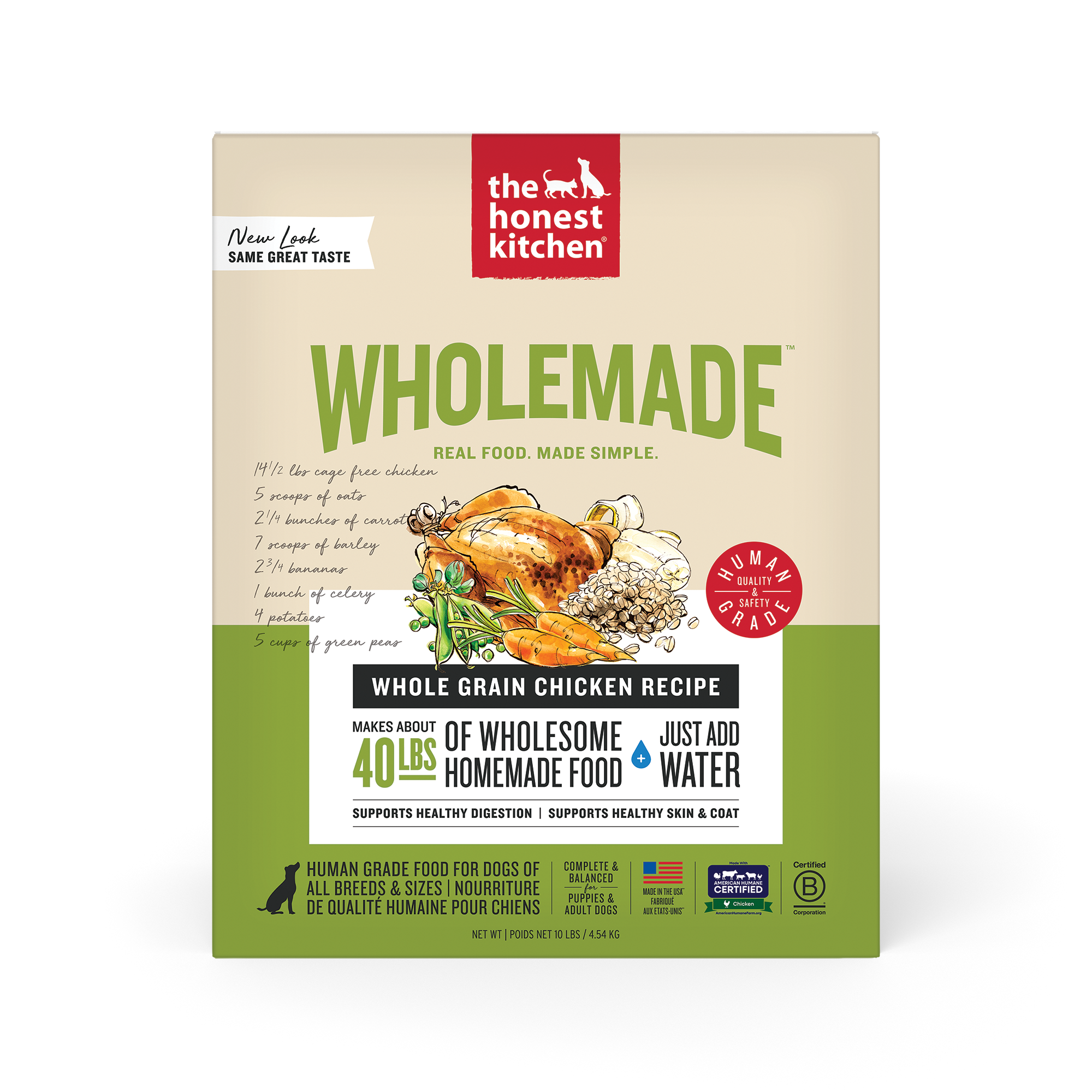
Wholemade Whole Grain Chicken
The Honest Kitchen Wholemade Whole Grain Chicken earns a Sniff Score of 60/100 (B) with Fair evidence. Zero controversial ingredients flagged. Quality fat sources: named fat with marine oil (EPA and DHA source)..
Graded by The Sniff System
Quality fat sources: named fat with marine oil (EPA and DHA source).
Quality carbohydrate sources with declared fiber.
AAFCO formulation inferred from declared not stated. Verbatim statement not published by retailer.
Low protein quality. chicken delivers limited bioavailable amino acids.
Controversial ingredients · 1
- sodium seleniteSynthetic selenium source. Selenium is essential, but sodium selenite has a narrower safety margin than organic alternatives like selenium yeast. Better-formulated foods use the organic form.
Every flagged ingredient has a published basis (confirmed harm / regulatory action / precautionary). See methodology →
Read why each ingredient is good or bad for dogs.
- 1protein animalchicken
Real meat. Primary protein source, with the amino acid profile dogs actually evolved to eat.
- 2grainbarley
Whole grain with a low glycemic profile and some soluble fiber. Easy on blood sugar.
- 3vegetablepotato
Standard white potato. Steady carb source, common starch in grain-free recipes.
- 4fatflaxseed
Plant source of omega-3. Helpful for skin and coat, though dogs absorb omega-3 from fish more efficiently.
- 5grainoats
Whole grain. Steady energy, soluble fiber, and well-tolerated by most dogs.
- 6legumepeas
Cheap protein bulk. Fine in small amounts, but when peas stack with lentils and chickpeas in the top ingredients, it's the pattern the FDA flagged in its heart-disease investigation. See why →
- 7vegetablecarrots
Real vegetable. Fiber, beta-carotene, and a small amount of antioxidant value.
- 8mineraltricalcium phosphate
Calcium and phosphorus source. Same role as dicalcium phosphate, slightly different ratio.
- 9supplementparsley
Real herb. Trace amount of vitamins K and C. The dose in kibble is small, mostly there for label appeal.
- 10bananas
- 11vegetablecelery
Real vegetable. Mostly water and a little fiber. Decorative more than nutritional in the amounts used.
- 12minerals*
- 13supplementtaurine
Amino acid critical for heart health. Especially important in grain-free or pulse-heavy formulas where natural taurine precursors run thin.
- 14vitamins**
- 15supplementdried kelp
Natural source of iodine and trace minerals. A common premium-brand inclusion.
- 16mineralsalt
Sodium chloride. Required at small doses for normal physiology. Not a quality concern in standard amounts.
- 17fatfish oil
Concentrated omega-3s. The reason 'EPA' and 'DHA' get to show up on the bag.
- 18choline chloride. **vitamin e supplement
- 19vitaminvitamin b12 supplement
Essential for red blood cell formation and neurological function. Plant ingredients lack B12, so it has to be added.
- 20vitamincalcium pantothenate
Same as d-calcium pantothenate. Vitamin B5 in standardized form.
- 21vitaminvitamin d3 supplement
The active form of vitamin D dogs need. Required for calcium absorption and bone health.
- 22vitaminthiamine mononitrate
B vitamin (B1). Essential for nervous system function. Cooked-in vitamin loss is why thiamine is always added back.
- 23riboflavin . *potassium chloride
- 24iron amino acid chelate
Iron bound to amino acids for better absorption. Premium form versus inorganic iron sulfate.
- 25zinc amino acid chelate
Zinc bound to amino acids for better absorption. Same idea as zinc proteinate, the premium form of the mineral.
Showing first 25 of 28. Position 1-5 has the largest weight in the recipe.
20 of 25 ingredients have a curated note. Coverage grows over time.